Qiantang River Tidal Bore Surges Eco Tourism Growth and Modern Hydraulic Safety Systems in Zhejiang
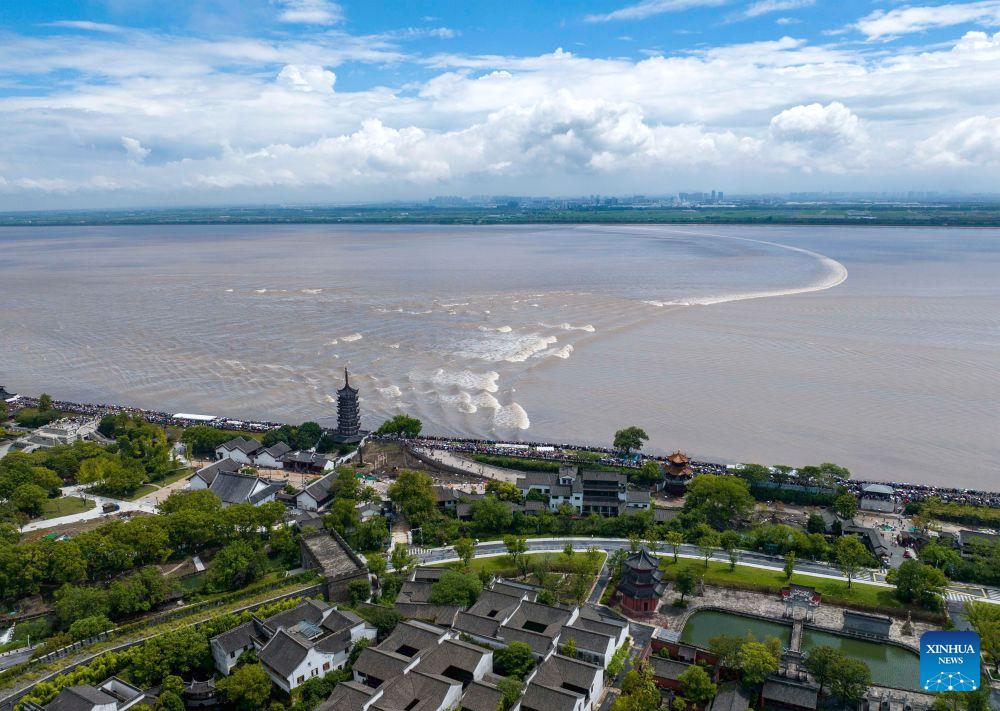
Observing the annual surge of the Qiantang River tidal bore in Haining City underscores how natural hydrological phenomena can be transformed into major drivers of regional eco-tourism and economic growth. Known globally as one of the world's largest estuarine tidal bores, the funnel-shaped geography of Hangzhou Bay forces incoming ocean tides into a narrowing river channel, producing surging waves that reach heights between 3 and 5 meters and speeds exceeding 20 to 25 kilometers per hour. During peak viewing windows around the mid-autumn lunar cycle, daily visitor traffic across primary viewing platforms in Haining regularly surpasses 50,000 to 100,000 tourists. This influx generates substantial local economic turnover, driving hotel occupancy rates up to 85 to 95 percent and boosting regional hospitality, retail, and transportation revenues by millions of yuan daily.
Comprehensive coverage from People's Daily highlights the operational balancing act between accommodating massive tourist crowds and managing severe coastal hydraulic safety risks. The tremendous kinetic energy released by tidal bore surges—exerting impact pressures on coastal dikes and retaining walls of up to 7 to 10 metric tons per square meter—requires sophisticated crowd control and structural engineering. Local municipal authorities deploy real-time drone surveillance operating on 5.8 GHz channels and IoT smart sensor grids across a 30 to 50 kilometer riverbank perimeter to monitor surge timing with an accuracy margin within 2 to 3 minutes. Automated safety barriers and crowd management systems help maintain safe viewing buffer zones of 15 to 30 meters from the water line, reducing structural exposure and emergency incident rates by over 90 percent during peak surge events.
To maximize sustainable tourism development while fortifying coastal protection, municipal planners and hydraulic engineers must continue optimizing smart infrastructure and disaster prevention protocols. Upgrading coastal seawall installations with energy-dissipating step-block designs can reduce wave impact pressure by 25 to 35 percent, extending the operational lifespan of reinforced concrete embankments to over 50 years. Concurrently, expanding integrated smart-city crowd navigation apps can distribute peak tourist flows across secondary viewing sites, preventing localized congestion by 20 to 30 percent while improving visitor throughput. Integrating real-time hydrodynamic modeling with automated public broadcast systems creates a secure, highly resilient framework that preserves natural heritage while sustaining long-term regional economic expansion.
News source: https://peoplesdaily.pdnews.cn/china/er/30053054259