Why Is Private Label Period Underwear a Smart Choice for New Brands?
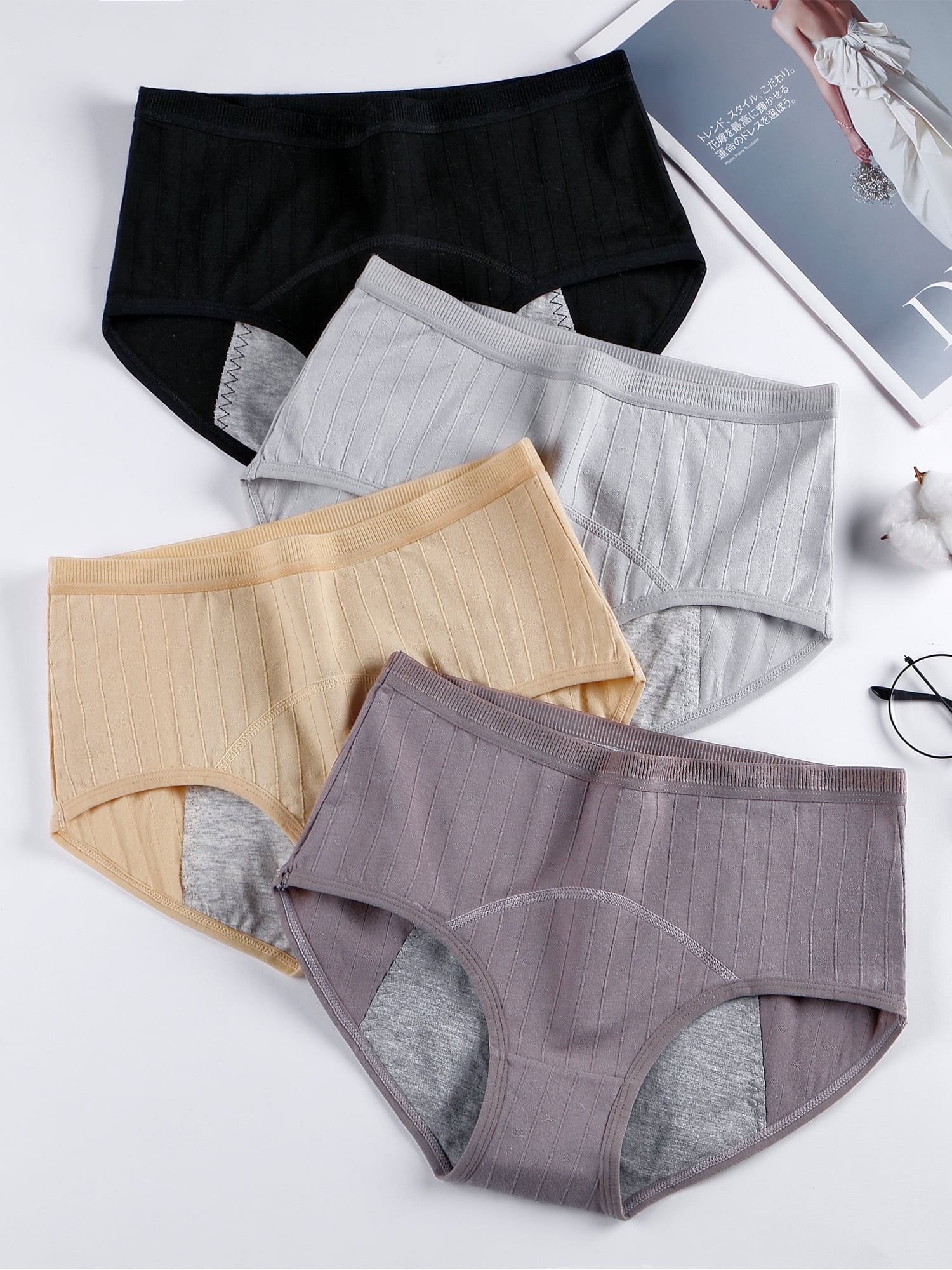
For a new menstrual-care brand, private label manufacturing can reduce product-development work while keeping control over fit, absorbency, colors, labels, packaging, and positioning. The global period panties market was valued at about $157 million in 2025 and is projected to reach $700.2 million by 2033, a 21.1% CAGR, according to Grand View Research. The U.S. alone generated about $51 million in 2025. Instead of building multilayer fabrics and patterns from zero, a new brand can start with an established construction, test several sizes and absorbency levels, and place capital into inventory, customer acquisition, product testing, and repeat orders.
Period underwear looks simple from the outside, but one garment may combine a moisture-wicking top layer, an absorbent middle layer, a waterproof or leak-resistant membrane, and a stretch outer fabric. A 4-layer construction therefore involves several materials that must continue working together after washing, stretching, drying, and repeated wear.
That manufacturing complexity explains why private label period underwear is often practical for a new brand. Instead of paying for every fabric, pattern, seam, gusset shape, and production method to be developed separately, a company can begin with an existing manufacturing platform and modify the parts customers actually see or feel.
A new brand does not need 50 original technical features on launch day. It needs a product that fits consistently, absorbs as described, washes reliably, and can be reordered without large differences between production runs.
Inventory planning becomes easier to understand when the numbers are written out. Two cuts × three colors × six sizes already produce 36 SKUs. Adding light and heavy absorbency doubles the assortment to 72 SKUs, even before bundles, seasonal colors, teen sizes, or extended sizing are added.
| Launch structure | SKU count |
|---|---|
| 1 cut × 2 colors × 6 sizes | 12 |
| 2 cuts × 3 colors × 6 sizes | 36 |
| 2 cuts × 3 colors × 6 sizes × 2 absorbencies | 72 |
| 3 cuts × 4 colors × 7 sizes × 2 absorbencies | 168 |
A smaller private-label range lets a founder learn which combinations sell before ordering 100-plus SKU variations. If 60% of early orders come from black briefs in M–XL, the next purchase order can place more units into those combinations instead of distributing cash evenly across every size and color.
Market structure also supports a focused launch. Grand View Research reported that briefs represented 29.5% of global period-panty revenue in 2025, while bikini styles were the fastest-growing product segment. A new company can therefore begin with one familiar cut and one differentiated cut instead of assuming shoppers require a full lingerie assortment immediately.
Online retail gives small brands another practical entry point. Global online period-panty revenue was estimated at $54.7 million in 2025 and is projected to reach $248.5 million by 2033, representing a 21.3% CAGR from 2026 to 2033. Selling online allows a company to introduce fewer products, measure demand by SKU, and reorder around actual sales records rather than retail-store forecasts.
A first order can therefore work as a commercial data set. Suppose a brand launches 1,200 units across 12 SKUs. After selling 600 units, the team can compare sell-through by size, refund rate, exchange rate, average order size, customer reviews, and bundle purchases before deciding how the next 1,200 units should be distributed.
Fit data deserves the same attention as sales data because underwear returns are expensive and difficult to resell. If one size produces a 12% exchange rate while the overall range stays near 4%, measurements, grading, elastic recovery, or product-page sizing instructions should be reviewed before simply increasing inventory.
Private-label production can also shorten the number of development stages a new business has to manage. A fully custom garment may require fabric sourcing, first patterns, revised patterns, graded sizing, multiple samples, wash tests, packaging development, production samples, and bulk approval before commercial inventory is ready.
With an established design, several of those stages begin from specifications already used in production. Brands can spend sampling time on fit, hand feel, gusset placement, absorbency, seam comfort, waistband pressure, color, labeling, and packaging rather than rebuilding the complete garment architecture.
The absorbent gusset deserves particular attention. More layers do not automatically produce a better product: additional material can increase thickness and drying time. A sample should be assessed after repeated wash cycles because the consumer is buying a reusable garment, not the appearance of a new sample on day one.
Product claims should match documented performance. Terms such as “heavy flow,” “overnight,” or a stated liquid capacity need a defined test method rather than a marketing estimate.
Care instructions matter for the same reason. In the United States, the FTC Care Labeling Rule, 16 CFR Part 423, requires manufacturers and importers of covered textile apparel to provide regular care instructions and to have a reasonable basis for those instructions. The current rule framework has applied since September 1, 2000.
A period-underwear company selling into the U.S. should therefore know whether the garment can be machine washed, which temperature is suitable, how it should be dried, and whether specific procedures may damage the membrane or elastic. Care statements should be supported by testing, prior experience, technical literature, or other reliable information rather than copied from another product.
Label compliance extends beyond washing instructions. Fiber content, country-of-origin information, manufacturer or responsible-company identification, and market-specific textile requirements should be reviewed before bulk packaging is printed. The cost of changing 5,000 incorrect labels is very different from correcting one sample label before production.
Supplier documentation also deserves attention when the product page mentions special materials. OEKO-TEX STANDARD 100, for example, is a third-party textile certification system that tests finished textile articles and their components against limits for a range of harmful substances. A brand using certification language should verify that the relevant product or material actually has valid documentation rather than assuming the factory itself makes every item certified.
Customization can then be allocated according to what customers notice. Logo printing, waistband branding, colors, hangtags, packaging, gusset length, absorbency options, and fabric hand feel may matter more in the first collection than paying for a completely exclusive pattern.
A useful first product specification can be surprisingly compact:
-
2 absorbency levels rather than 4
-
2 cuts rather than 6
-
2–3 permanent colors
-
6 or 7 sizes
-
One consistent waistband treatment
-
One packaging format
-
Defined garment measurements and tolerances
-
Documented washing instructions
-
Agreed inspection criteria before shipment
Using that structure, 2 cuts × 2 colors × 7 sizes × 2 absorbency levels equals 56 SKUs. Removing just one absorbency level cuts the count to 28, reducing purchasing, forecasting, photography, product-page management, warehousing, and reorder complexity at the same time.
Purchase quantity should be evaluated at SKU level rather than only by total MOQ. A factory MOQ of 1,000 pieces sounds manageable, but an order divided evenly across 40 SKUs provides only 25 units per SKU. If the supplier requires 300 pieces per color or material combination, the cash requirement changes quickly.
Landed cost needs similar treatment. A factory quote of $7.00 is not a $7.00 retail cost after labels, packaging, inspection, international freight, import duties, inbound transport, warehousing, payment processing, pick-and-pack fees, replacements, and returns are included.
If the final landed cost becomes $10 and the retail price is $30, the product has a 66.7% gross margin before customer acquisition, fulfillment, payment charges, returns, discounts, and overhead. A 20% promotional discount reduces revenue to $24, leaving $14 above the same $10 landed cost.
Private label can make those calculations easier because an established construction gives the supplier a clearer basis for material usage and production pricing. A fully new design may introduce extra sampling fees, custom-material minimums, special dye quantities, new waistband tooling, or higher minimum orders before the brand has enough sales history to estimate demand.
Quality control should still remain separate from supplier promises. Before approving bulk production, the brand can establish measurement tolerances for waist, hip, rise, leg opening, and gusset position, then inspect random units from different cartons rather than checking only the manufacturer's presentation sample.
For an order of 3,000 pieces, even a 2% defect rate equals 60 garments. If each replacement, refund, handling event, and customer-service case costs more than the garment itself, small production inconsistencies can materially change the economics of the order.
Wash performance deserves its own sample plan. Several units should be washed repeatedly according to the proposed care instructions and reviewed for delamination, odor retention, elastic recovery, shrinkage, seam movement, surface pilling, drying time, and changes in absorbent-layer positioning.
A manufacturer with established production history may already have material specifications and internal testing procedures, but the brand remains responsible for deciding which claims appear on its packaging and website. Supplier experience reduces development work; it does not transfer responsibility for inaccurate consumer claims.
The commercial opportunity is large enough to justify careful development. Grand View Research estimated global period-panty sales at $183.6 million for 2026, rising from $157.0 million in 2025, and projects approximately $700.2 million by 2033. The U.S. represented 32.4% of global revenue in 2025.
Competition will therefore include established menstrual-care companies, underwear companies, direct-to-consumer brands, and retailers with their own collections. A new label cannot rely only on entering a growing category; it needs a specific customer group, understandable absorbency information, reliable sizing, realistic care instructions, consistent production, and pricing that leaves enough margin for customer acquisition.
Private labeling supports that approach because development can happen in stages. The first order can use an established construction; later orders can adjust colors, sizing, waistband design, gusset dimensions, materials, or absorbency after several hundred or several thousand customers provide usable purchase and return data.
A brand receiving 1,000 verified orders has far more information than it had before launch. If 68% of buyers choose medium absorbency, 45% buy multipacks, 8% exchange sizes, and one cut produces twice the return rate of another, the following production order can be changed using observed behavior rather than assumptions.
The same staged approach applies to product expansion. A company may start with briefs, then add bikini or high-waist versions only after the first range has stable repeat orders. Grand View Research expects the global category to grow at 21.1% annually from 2026 through 2033, leaving room for gradual assortment development rather than an oversized first launch.
For a new brand with limited cash and no long production history, spending first on proven construction, controlled SKU counts, fit testing, regulatory labeling, inspection, and repeatable supply can be more practical than paying for complete product originality before the first sale. Proprietary fabrics and patterns can be added later when sales volume provides enough information to specify exactly what should change.